
 West Yorkshire

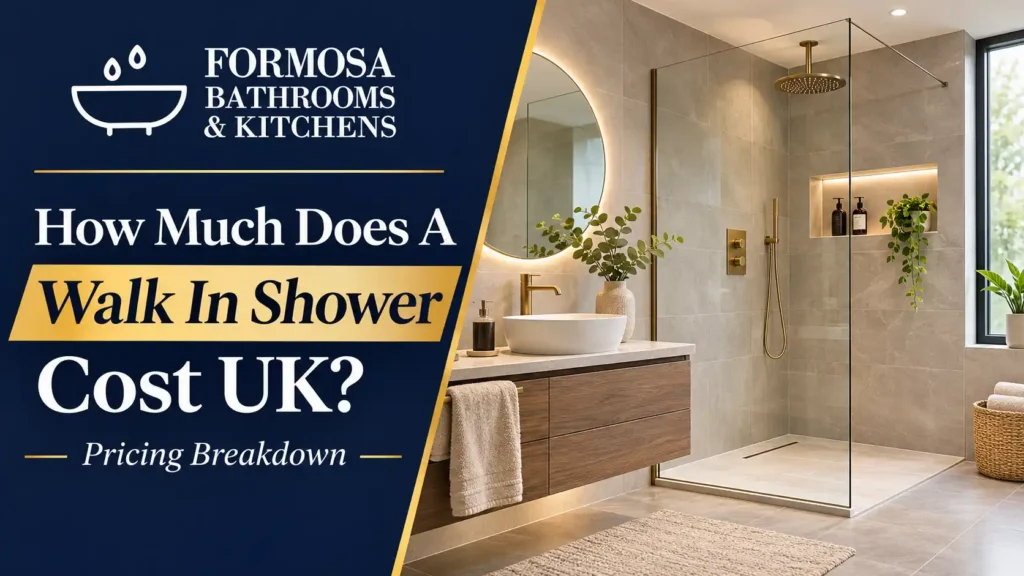
A walk-in shower is like an open doorway to a calmer bathroom. No tub to climb over, no curtain to wrestle with, just a clean, uninterrupted step into the water. But like any doorway, the cost depends on what’s behind the walls. So, how much does a walk in shower cost UK in 2027?
In the UK, a standard walk-in shower installation typically costs £1,500-£4,500. A more involved project can climb to £7,000 to £15,000+, particularly with level-access designs and bespoke finishes. Your existing plumbing, drainage, and bathroom layout act as the foundations. If they’re sound, the build is straightforward, and if they need reworking, the budget grows with them.
Let’s map out how much a walk-in shower costs and what drives the pricing. Also, we’ll discover what’s included or not in a walk-in shower installation quote, how to cut costs, and some top-notch design ideas.
How Much Does A Walk In Shower Cost UK? A Step-By-Step Breakdown
A walk-in shower looks simple from the outside. One glass screen, a shower tray, and some stylish fittings. Behind those pieces, several jobs need careful coordination. The total installation price reflects each part.
Most standard installations fall around £1,500-£4,500. Level-access and bespoke installations can cost considerably more. Actual prices depend on your bathroom and chosen specification.

Let’s take a closer look at the probable pricing breakdown for a walk-in shower installation in the UK:
◼ Walk-in Shower Cost By Shower Type:
| Walk-in Shower Type | Average Estimated Cost Range | Best For |
| Basic Bath-to-Shower Swap | £1,200-£2,500 | Tight budgets and fast turnarounds |
| Standard Walk-in Shower | £1,500-£4,500 | Most family bathrooms |
| Premium Walk-in Shower(Frameless/Designer) | £3,000-£5,000 | Modern, high-spec renovations |
| Level-Access | £3,500-£7,000+ | Step-free accessibility |
| Bespoke Luxurious Designs/Wet Room Installation | £7,000-£15,000+ | Luxury builds |
◼ Walk-in Shower Material Costs:
◻ Shower Base & Drainage Component Costs:
| Component Name | Standard Range | Mid-Range / Designer |
| Shower Tray | £120-£250 (Acrylic-capped) | £250-£600+(Slate-effect/Stone resin) |
| Tray Riser Kit (Legs & Plinth) | £35-£70 | £70-£120 |
| Wet Room Former (Alternative) | £180-£350 | £350-£650 |
| Fast-Flow Waste Trap | £20-£45 | £60-£180 |
◻ Glass Screen and Hardware Costs:
| Component Name | Standard Range | Mid-Range / Designer |
| Main Fixed Glass Panel | £150-£280 (6mm-8mm, chrome profile) | £300-£750+ (10mm, brushed brass/black/fluted) |
| Bracing/Support Bar | £25-£50 | £60-£130 |
| Hinged Flipper/Return Panel | £100-£180 | £200-£400 |
| Easy-Clean Glass Coating | Up to £30 | £50-£100 |
◻ Shower Valve and Brassware Costs:
| Component Name | Standard Range | Mid-Range / Designer |
| Shower Valve/Unit | £60-£150 | £200-£600+ |
| Shower Head & Rail/Arm | £40-£100 | £120-£350+ |
| Wall Outlet Elbow & Hose | £15-£35 | £40-£90 |
◻ Wall Finishes and Waterproofing Material Costs:
| Component name | Estimated Range |
| Waterproof Tanking Kit | £50-£120 |
| Tile backer Boards | £15-£30 per board |
| Wall Tiles(Ceramic/Porcelain Tiles) | £20-£60 per m² |
| Wall Panels(Waterproof PVC/Laminate Wall Panels) | £60-£150 per panel |
| Adhesive, Grout and Sanitary Silicone | £60-£130 |
◻ Plumbing and Electrical First-Fix Parts Costs:
| Component name | Estimated Range |
| Pipework and Isolation Valves | £40-£100 |
| Waste Pipe and Solvent Fittings | £20-£50 |
| Electrical Materials | £50-£150 |
◼ Walk-in Shower Cost By Setup Differences:
◻ Base Setup Costs: Tray Base vs. Level Access
| Base Setup Type | Supply and Fit Costs | |
| Tray Base | RaisedTray | £600-£1,100 |
| Low-Profile Tray | £800-£1,500 | |
| Level-Access Wet Room Base | £2,200-£4,500+ | |
◻ Glass Configuration Costs: Single Screen vs. Flipper vs. Return
| Glass Configuration Type | Supply Cost Range |
| Single Fixed Screen | £200-£450 |
| Screen+Hinged Flipper Panel | £350-£650 |
| Screen+ Fixed Return Panel | £400-£800+ |
◻ Shower Valve Costs: Electric vs. Mixer vs. Digital
| Valve Setup Type | Unit Cost | Average Installation and Plumbing Costs |
| Electric Shower(Like-for-Like) | £60-£200 | £150-£300 |
| Exposed Thermostatic Mixer | £100-£250 | £200-£400 |
| Concealed Thermostatic Mixer | £200-£450 | £400-£700+ |
| Smart/Digital Shower | £350-£700+ | £450-£800+ |
◼ Walk-in Shower Installation Labour Costs:
◻ Labour Costs By Trade:
| Trade Name | Hourly Rate | Daily Rate |
| Multi-skilled Bathroom Fitter | £35-£50 | £250-£480 |
| Plumber | £40-£60 | £300-£450 |
| Tiler | £35-£50 | £250-£350 |
| Part P Electrician | £45-£60 | £300-£450 |
| Joiner/Carpenter | £30-£45 | £220-£320 |
◻ Labour Cost by Task Type:
| Task Type | Average Labour Rate Per Day | |
| Strip-Out and Waste Disposal | £250-£450 | |
| First-Fix Plumbing and Waste Alteration | £200-£500 | |
| Subfloor and Tray/Former Installation | £200-£600 | |
| Boarding and Waterproof Tanking | £150-£300 | |
| Wall Tiling/Wall Panel Fitting | Tiling Labour | £400-£850 |
| Wall Panel Fitting | £200-£350 | |
| Second Fix Brassware and Glass Screen | £200-£350 | |
◼ Walk-in Shower Installation Costs in UK Regions:
| UK Region Name | Standard Walk-in Shower Range | Level-Access Wet Room Range |
| Greater London | £2,600-£4,200 | £4,500-£8,500 |
| North West & Yorkshire | £1,800-£2,900 | £3,200-£6,000 |
| South East | £2,300-£3,600 | £4,000-£7,500+ |
| East of England and South West | £2,100-£3,300 | £3,600-£6,800 |
| Midlands(East & West) | £1,900-£3,000 | £3,400-£6,200 |
| North East, Scotland & Wales | £1,750-£2,800 | £3,100-£5,800 |
| Northern Ireland | £1,700-£2,700 | £3,000-£5,500 |
◼ Walk-in Shower Installation Additional Costs:
| Additional Cost Element | Average Cost Range |
| Rotten Floorboard/Joist Repair | £150-£500 |
| Wall Re-boarding & Replastering | £200-£450 |
| Floor Levelling(Self-Levelling Compound) | £100-£250 |
| Asbestos Testing | £150-£600+ |
| Soil Stack/Waste Pipe Rerouting | £200-£600 |
| Shower Pump Installation | £350-£700 |
| Combi Boiler/Unvented Flow Adjustments | £100-£250 |
| Extractor Fan Upgrade | £180-£350 |
| Consumer Unit(Fuse Box) Upgrade | £300-£600 |
| IP-Rated Downlights | £150-£300 |
| Skip Hire or Licensed Waste Removal | £180-£400 |
| Underfloor Heating | £350-£700 |
| Recessed Shower Niches | £150-£300 |
| Bespoke/Angled Glass Cutting | £200-£500+ |
What May Drive A Walk-In Shower Installation Cost?
The open feel of a walk-in shower feels dreamy. But nobody warns you how differently the price can turn out on the board. Behind the scenes, things like your pipework, your floor, and the state of your walls all quietly nudge the final bill up or down.
Let’s find out what can really move the numbers of your quote:
◾ Bathroom Size And Existing Layout
A larger shower area needs more glass, tiles and waterproofing, so every extra square metre nudges the materials bill upward. Awkward corners, sloped ceilings and uneven walls also mean more cutting and fitting, which adds hours to the job.
Keeping the shower close to existing connections keeps things simple. Moving it across the room brings new pipework, more disruption, and extra labour cost.
◾ Shower Tray And Glass Quality
The materials you choose influence your budget. Standard trays usually sit at the lower end of the budget than premium alternatives. Stone resin and specialist designs cost more to buy. And because they can be heavier and trickier to fit, they often add installation time too.
Glass quality matters as well; thicker panels, special coatings, and bespoke sizes all push the price higher.
◾ Plumbing Alterations And Drainage
Reusing existing pipework keeps labour requirements low. Relocating supplies means extra plumbing work, and changing the waste position adds complexity and cost.
Also, if you want a level-access shower, it needs particular drainage planning. Adjusting the floor to create the right falls can add further to the final price.
◾ Shower Type And Controls
An electric shower uses electricity to heat water. A mixer shower combines hot and cold supplies. Power showers use a pump to improve water flow. Each step up in the system means more equipment to buy and more work to fit.
Digital controls introduce additional components and installation requirements that push supply and labour costs up together.
◾ Tiling, Waterproofing And Flooring
Tiles influence both appearance and installation time. Natural stone often needs specialist preparation and maintenance. Porcelain and ceramic offer different price points. Large tiles and intricate patterns also take longer to lay, so labour climbs with the level of detail.
Waterproofing protects the structure behind the tiles. The shower area needs suitable preparation and sealing. Level-access projects may require additional floor work.
◾ Electrical Requirements And Labour
Some installations need additional electrical work. Electric showers require a suitable dedicated electrical circuit. Bathroom electrical installations need appropriate protection and compliance. New circuits, upgrades, and certification all add to the bill. Use a registered, competent electrician for electrical installation work.
Labour costs also vary across the country. London and the South East generally cost more. Your project’s complexity matters just as much.
How To Keep Walk-In Shower Setup Costs Down?
A beautiful shower doesn’t require unlimited spending. A few sensible decisions can protect your budget. Knowing where savings make sense is essential. Here’s how to keep costs down when setting up a walk-in shower:
✔ Keep The Existing Plumbing Position
Moving pipework can increase installation costs quickly. Keep the shower near existing water connections. This can reduce additional plumbing and labour requirements.
✔ Choose Standard Shower Sizes
Standard shower trays offer plenty of design choices. They also avoid some bespoke manufacturing costs. Choose a suitable size for your bathroom. A well-planned standard design can look excellent.
✔ Compare Materials Before Purchasing
Glass screens, trays, and tiles have different prices. Compare quality alongside the initial purchase cost. Cheaper materials aren’t always cheaper over time.
Consider maintenance requirements before choosing decorative finishes. Practical materials can save future maintenance expenses.
✔ Stick To Essential Upgrades
Extra features can increase your installation bill quickly. Heated flooring, digital controls, and built-in lighting add costs.
Decide which features genuinely improve everyday use. Skip upgrades that offer little practical benefit. A simpler design can still look beautifully finished.
✔ Get Detailed Quotations Before Starting
Ask several bathroom installers for itemised written quotations. Compare the same materials and installation requirements. Check labour, preparation, and finishing costs carefully.
A very cheap quotation may exclude important work. Ask questions before committing to the project. Never settle for paying in cash without documents or vouchers as proof of payment.
Top 5 Walk-In Shower Ideas For 2027 Bespoke Bathrooms
A walk-in shower can become your bathroom’s standout feature. The right design brings style and everyday practicality. Here are five ideas worth exploring for 2027:
1. Frameless Glass Walk-In Shower
Frameless glass creates a clean, open appearance. Its transparent panels allow light to travel freely. This makes smaller bathrooms feel more spacious. It also creates fewer visual barriers across the room. With fewer visual barriers, the whole room breathes easier.
2. Walk-In Shower With Built-In Storage Niche
Shampoo bottles shouldn’t hold your shower floor hostage. A recessed niche works like a tidy little pocket in the wall. It keeps everything within reach and out of the way. Match the niche tiles to the wall, and it blends in seamlessly.
3. Level-Access Walk-In Shower
A level-access shower is like a red carpet with no step to trip on. It removes the raised tray edge. This creates a smoother entrance into the shower. It makes everyday bathing easier and suits homes planning for the future. Proper drainage and waterproofing remain essential.
4. Walk-In Shower With Rainfall Showerhead
A rainfall showerhead brings a spa-like feel home. Its broad spray creates a relaxing shower experience. Ceiling-mounted designs also create a sleek appearance. Check your water pressure before choosing one. Some rainfall systems need higher flow rates.
5. Walk-In Shower With A Feature Wall
A feature wall gives your shower instant character. Patterned tiles create a striking visual focal point. You can use contrasting colours or textures. This adds personality without decorating every wall. Pair it with simple fittings for balance.
Bottom Line
A walk-in shower can give your bathroom new life. But the installation cost depends on several details. Wondering How much does a walk in shower cost UK? Standard projects often start around £1,500–£4,500. More involved designs need a larger budget.
Your plumbing, drainage, and material choices matter. So does the condition of your existing bathroom. A detailed quotation helps bring everything together.
A walk-in shower installation may include intricate jobs that are not possible with DIY. Hire professional bathroom fitters to install. Make sure the installation follows the applicable UK building and safety requirements. A carefully planned shower often starts with the right advice and meticulous planning.
Frequently Asked Questions About Walk-In Shower Installation Costs
How Much Does It Cost To Install A Walk-In Shower In The UK?
A standard walk-in shower installation in the UK usually costs between £1,500 and £4,500. Complex and luxurious projects may cost around £7,000 to £15,000+.
How Much Does It Cost To Take Out A Bath And Replace With A Shower?
Taking out a bath and replacing it with a standard walk-in shower typically costs between £1,300 and £2,500 in the UK. Prices can fluctuate based on several factors.
Is A Walk-In Shower More Expensive Than A Standard Shower?
Generally, yes, a walk-in shower is more expensive than a standard enclosed shower. Because walk-in designs need larger screens, they may also require specialised trays and waterproofing.
How Much Do Plumbers Charge To Fit A Shower?
UK plumbers typically charge around £40–£60 per hour. Complex installations may involve separate fixed-price quotations.
How Long Does A Shower Installation Take?
A straightforward shower replacement may take 1-2 hours to one day. More involved installations can require several working days.
How Long Does It Take To Install A Walk-In Shower?
A like-for-like walk-in shower generally takes one to three days. Bath conversions may take three to seven days. Complex tiling and drainage work can extend installation.
Is A Walk-In Shower Cheaper Than A Wet Room?
Usually, a tray-based walk-in shower costs less than a wet room. A wet room needs more extensive waterproofing.